
Every business owner has heard it by now. "You need to be using AI."
So they open ChatGPT, ask it to write an email, get a mediocre result, and move on with their day thinking they have "tried AI."
That is not adopting AI. That is Googling with extra steps.
The real shift happening right now is something most B2B companies have not wrapped their heads around yet.
And it is not about learning a better prompt.
This Is Not a Tool. It Is a New Operating Model.
Think about when email replaced snail mail.
Nobody said "we added email to our workflow." They rebuilt how their entire company communicated. Internally. Externally. With clients, vendors, partners... everything changed. The companies that kept mailing letters did not just fall behind. They became irrelevant.
AI is that same kind of shift. Except it touches more than communication. It touches research, content, lead generation, SEO, sales intelligence, and operations, all at once.
McKinsey estimates 60% of all occupations have at least 30% of tasks that can be automated with technology that exists today. Not next year's technology. What is available right now.
The companies figuring this out are not just "using AI." They are building AI workforces, digital systems trained on their brand, their voice, and their market. All that operate 24/7 without burnout, turnover, or PTO requests.

Where B2B Companies Are Bleeding Money Right Now
Most B2B companies in the $5M to $200M range are stuck in one of three setups.
They have a full marketing team costing $300K to $400K a year that still cannot keep pace with the market.
They have one overwhelmed person trying to do everything alone.
Or they have hired an agency that promised results but that agency is dealing with the same problem. Not enough people to actually execute. You are one client in a sea of many, and your campaigns get whatever bandwidth is left after their bigger accounts are serviced. The deliverables trickle in. The strategy stays generic. And you are paying a premium for a team that is spread too thin to move the needle.
None of these work anymore.
Content takes weeks to produce. Warm leads go cold while someone manually researches them. Referral networks sit untapped inside LinkedIn connections nobody has time to mine. SEO is a 12-month grind while buyers increasingly search through AI tools like ChatGPT and Perplexity instead of Google.
According to HubSpot's 2024 State of Marketing report, 65% of B2B marketers say generating traffic and leads is their top challenge. Gartner found that B2B buyers spend only 17% of their purchase journey meeting with potential suppliers. The rest is independent research.
If your content is not out there, in volume, on the right platforms, optimized for both traditional and AI-powered search, then you do not exist to most of your potential buyers.
What an AI Workforce Actually Looks Like
This is where the mental shift needs to happen. Stop thinking about AI as a chatbot you ask questions to. Start thinking about it as a team of digital employees, each trained on a specific function of your business.
Here is what B2B companies are building right now:
Content Production at Scale
An AI content system trained on your brand voice, your industry expertise, and your messaging framework. It does not just write generic blog posts. It produces drafts across every channel including blogs, social posts, emails, and ad copy in your voice, consistently, every week.
It handles ideation based on what is working in your market. It generates visuals aligned with your brand. It tracks performance and learns from results, getting sharper over time.
The output gap is staggering. A Salesforce study found that high-performing marketing teams are 9.4x more likely to use AI for content creation. They are not better writers. They just have more leverage.

Network Intelligence and Warm Referrals
Cold outreach is dying. Response rates on cold email have dropped below half of 1% on average according to Woodpecker's 2024 benchmarks.
What still works? Warm introductions. Referrals. Relationships.
An AI-powered network intelligence system can scan your existing contacts and centers of influence via your LinkedIn connections, your CRM, your business relationships and surface referral opportunities you did not know existed.
It identifies who in your network is connected to your ideal customer profile. It scores and ranks those connections by fit and opportunity. It delivers qualified warm introductions on a silver platter instead of asking your sales team to cold call strangers.
SEO and AI Search Optimization
Traditional SEO still matters. But the game is expanding.
Gartner predicts that by 2026, traditional search engine volume will drop 25% as users shift to AI-powered search tools. I predict that estimate is low. Your buyers are already asking ChatGPT, Perplexity, and Gemini for vendor recommendations.
An AI SEO system identifies every high-value keyword in your space, builds the execution plan, creates the content, handles on-page optimization, and publishes. Essentially, compressing months of work into days. More importantly, it optimizes for AI search ranking, not just Google, so your brand shows up where the next generation of buyers is actually looking.
Opportunity Research and RFP Scanning
For companies that rely on bids, RFPs, or contract opportunities, AI can automate the entire discovery process. Scanning government and industry databases daily. Filtering against your ideal customer profile. Delivering a curated summary of qualified opportunities every morning.
No more manual sorting through portals. No more missed deadlines because someone forgot to check a website.
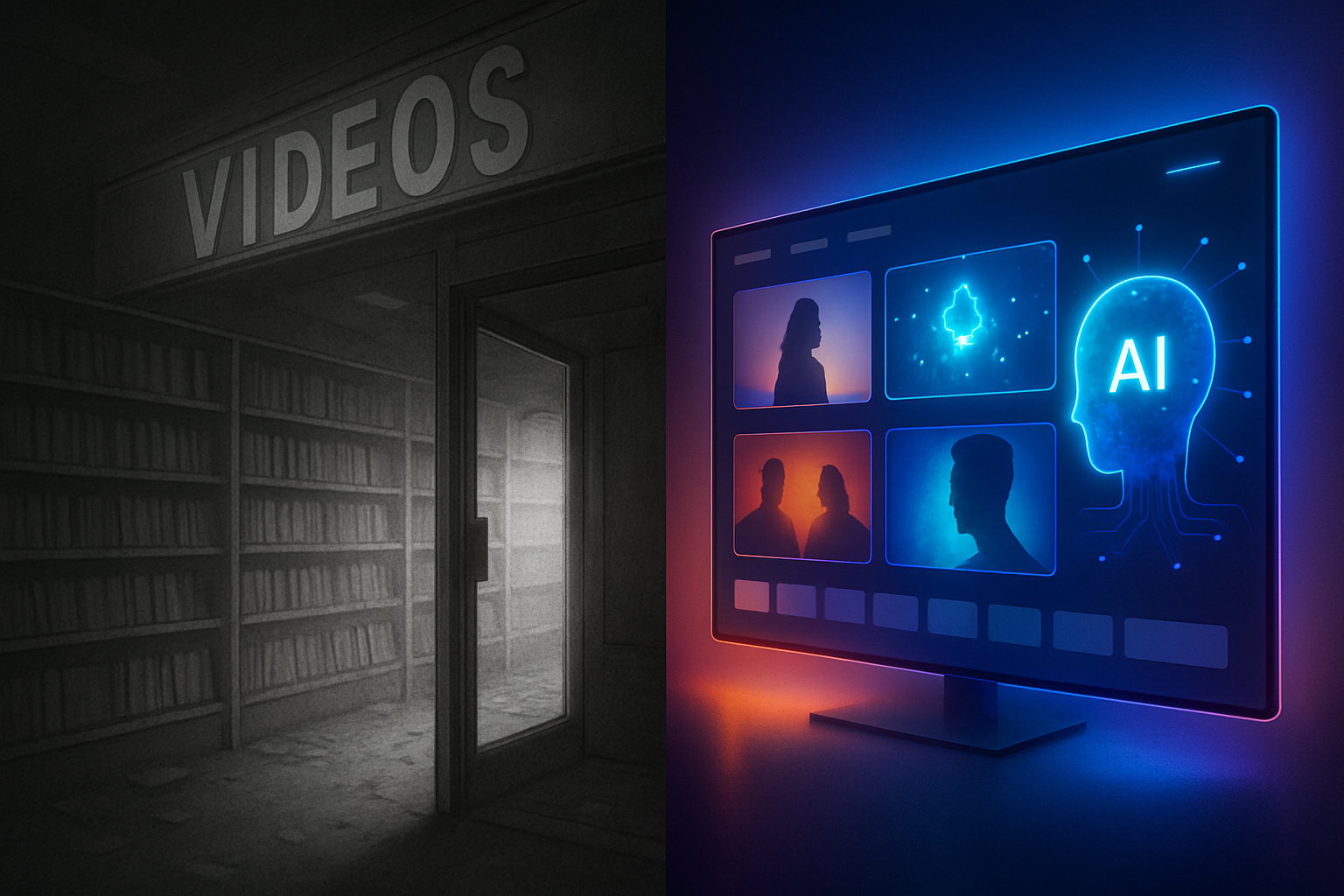
The Blockbuster Moment
Every industry has a point where the early adopters pull so far ahead that late movers cannot catch up.
Blockbuster had every advantage. They had locations, brand recognition, loyal customers. They still lost everything because they did not adapt fast enough.
The same dynamic is playing out in B2B right now. Companies adopting AI today are operating at 10x the speed at a fraction of the cost. According to Boston Consulting Group, businesses using AI in marketing and sales have seen revenue increases of 10 to 20% while reducing costs by up to 30%.
That gap compounds every month. The longer you wait, the wider it gets. And unlike hiring a bigger team or switching agencies, this is not something you can just throw money at later to catch up.
The Real Shift
This is not about replacing your team. It is about giving them leverage they have never had.
One person trained to work alongside AI can produce what used to take a department of five. Your existing staff becomes exponentially more valuable when they are directing AI systems instead of doing repetitive work manually.
The businesses that treat AI as "something IT handles" or "a tool for writing emails faster" will be the ones wondering what happened in 18 months.
The businesses that treat it as a fundamental operating shift, like email, like the internet, like mobile, will be the ones setting a pace nobody else can match.
Where to Start
You do not need to build everything at once. Start with the area that is costing you the most time or money right now. Content bottleneck? Start there. Leads going cold? Build the network intelligence layer. SEO stalled? Automate the execution.
The key is starting. Not with a ChatGPT subscription. With a system designed around your business, your voice, your market, and your goals.
Want to see what an AI workforce looks like in practice? Visit roycebrookmedia.com for more resources on building and implementing AI systems for B2B growth.